
Reflections from RAREsummit 2026
Dr Sarah Dixon-Clarke
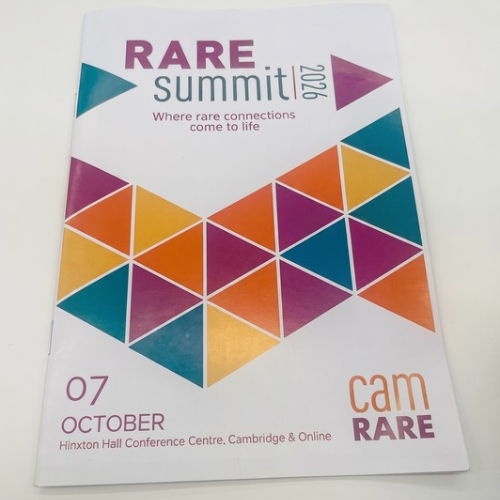
In October I attended the rare disease community at CamRARE’s RAREsummit2026, a day full of inspiring speakers, policy updates and practical workshops.
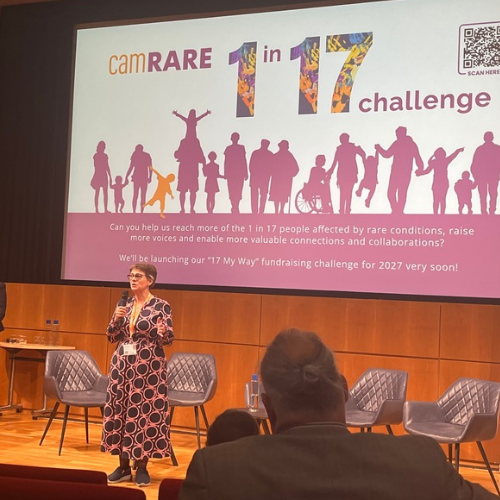
Sarah Baker opened the day by setting out the three things behind CamRARE’s work. The first is community, built through more than 40 events this year. The second is connection, through projects like the Rare Passport and Rare4Schools. The third is collaboration, through projects such as the Rare Care Project and a rare disease toolkit with Kyowa Kirin.
What’s next for rare disease policy
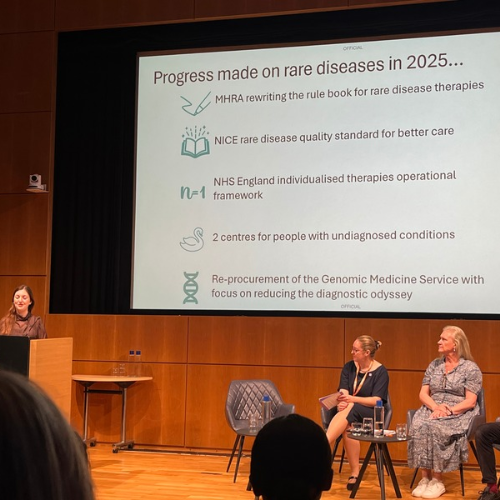
The policy panel brought a clear message: the community wants momentum to continue. With the UK Rare Diseases Framework ending soon, Genetic Alliance UK’s Future for Rare work found strong agreement that a dedicated UK-wide policy must follow, with tackling inequity as the top priority. The Office for Life Sciences confirmed the framework’s four priorities still stand. RAIRDA introduced the new NICE quality standard, which for the first time sets out what good rare disease care should look like and clear expectations. It covers four themes, 4 themes: a clear route to diagnosis, access to trusted information, better coordination of care and equitable access. There was a call for patients to get to know it and use it to ask for better care.
Data was the thread running through every talk. Speakers called for people with rare conditions to be findable in health records, and for a national patient experience survey so that progress can finally be measured.
The power of the patient voice
Annabelle’s Challenge and the London EDS Service spoke powerfully about how important, and how hard, self-advocacy can be. That is why they created an evidence-based Self-Advocacy Toolkit to help people navigate healthcare with confidence.
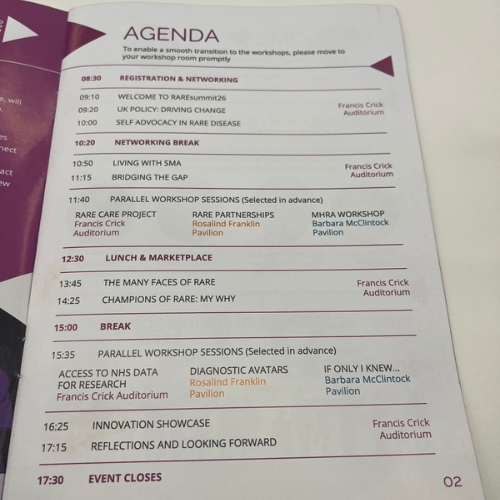
Throughout the day, speakers shared their personal stories and the work they are doing for others. Steven Jones offered a moving insight into life with SMA. Panels on “The varied faces of rare disease” and “Rare disease champions: What motivates me” brought together parents and advocates who have turned their own experiences into support for the wider community. Workshops gave space for hands-on discussion, including how patients can shape the MHRA’s approach to weighing the benefits and risks of new medicines, and how to navigate the maze to diagnosis.
There were so many stalls to visit and posters to read and too little time! One poster stood out. It explored the hidden impact of rare conditions on families’ time, work, finances and wellbeing. Almost half of respondents spend 16 or more hours a week managing their condition or care, and 69% spend more time arranging and travelling to appointments than receiving treatment. 84% say their ability to work has been affected, and 91% experience social isolation at least sometimes.
At the time of the summit, we were finalising our own FOP impact survey, and this poster showed exactly why that work matters. When NICE appraises a new treatment, it weighs costs against benefits, and evidence about the impact on everyday life is part of that picture.